
During the 2026 General Assembly, university leaders, researchers, faculty members, and students shared experiences in academic cooperation, discussed common challenges across the Americas, and explored new opportunities for collaboration in research, education, and sustainability.
Universities Facing the Climate Crisis
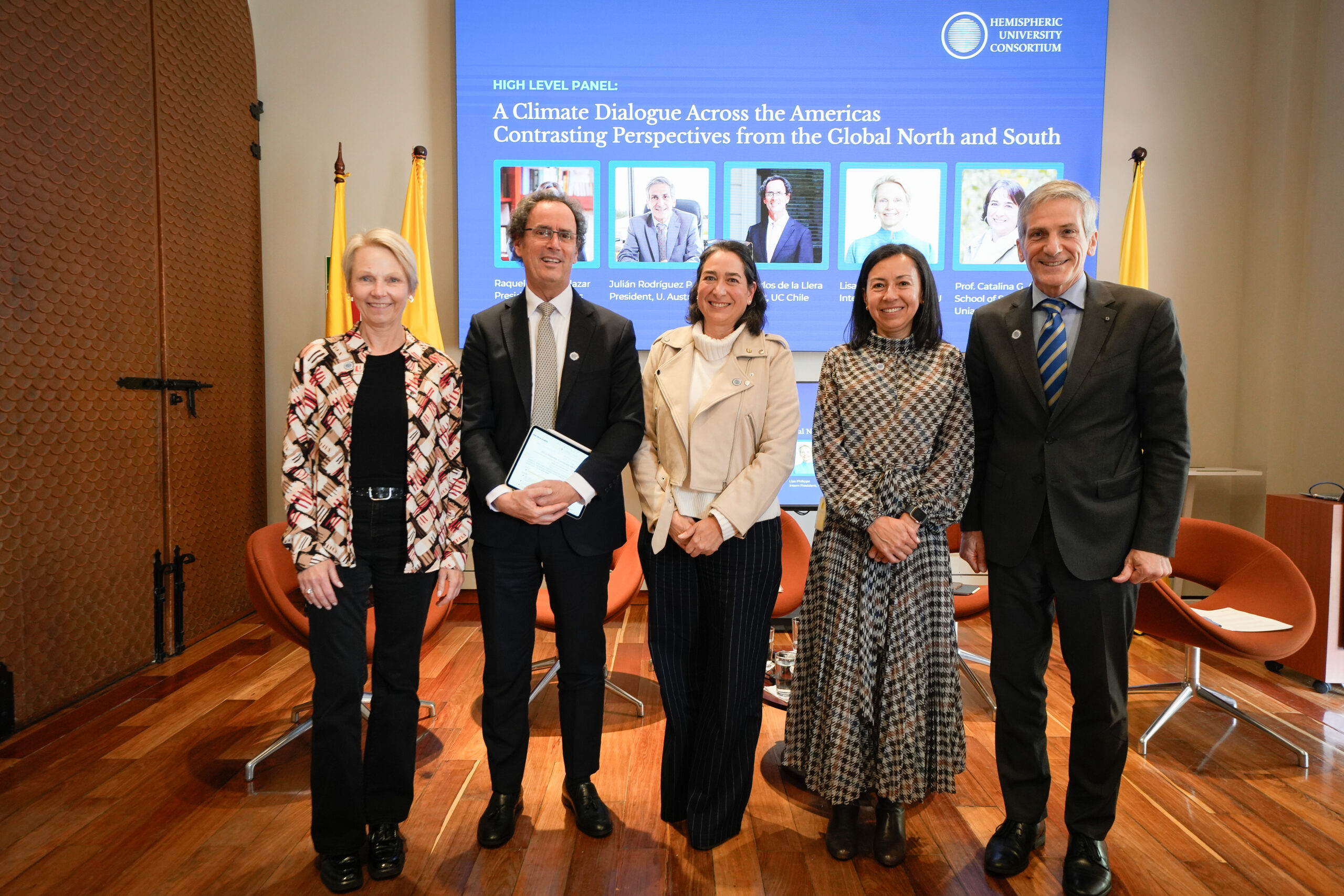
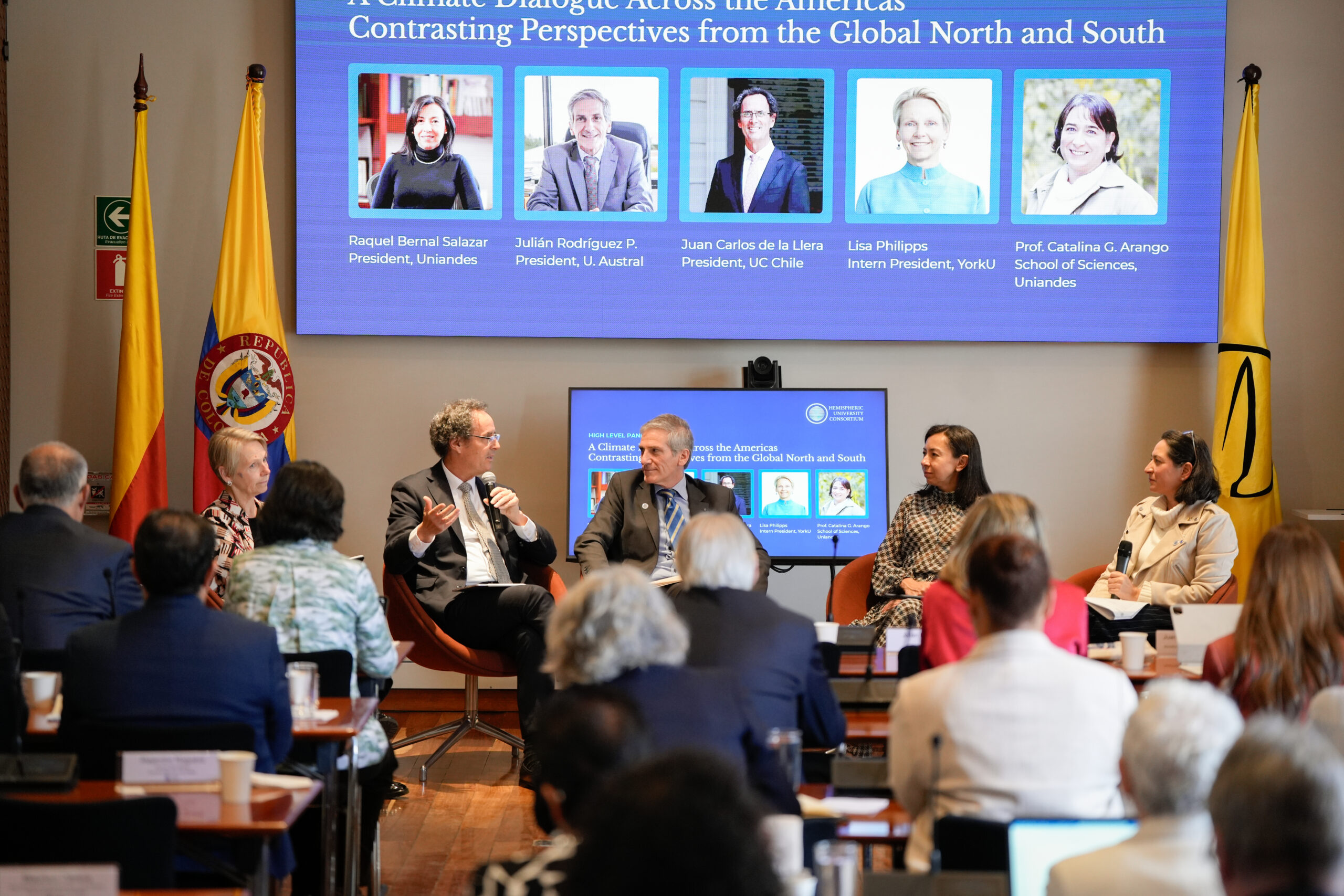
One of the Assembly’s highlights was the panel “Universities and Climate Leadership: Perspectives from North, Central, and South America,” featuring Raquel Bernal (Universidad de los Andes), Julián Rodríguez (Universidad Austral and HUC Chair), Juan Carlos de la Llera (Pontificia Universidad Católica de Chile), Carlos Araya Leandro (University of Costa Rica), and Lisa Philipps (York University).
The panel brought together perspectives from North, Central, and South America on the climate crisis, recognizing that both its impacts and the resources available to address it are unevenly distributed across the region.
Julián Rodríguez emphasized that universities’ responsibility goes beyond producing and transferring knowledge; they must also foster a culture of active commitment to sustainability. He shared Universidad Austral’s work in measuring its carbon footprint and social impact, as well as the creation of a center dedicated to sustainability and social inclusion.
Raquel Bernal highlighted the importance of engaging students and the broader university community, including through individual commitments that contribute to collective transformation. She also stressed that the complexity of the climate crisis requires systemic leadership, interdisciplinary collaboration, and renewed public trust in universities.
Juan Carlos de la Llera noted that HUC’s geographic diversity could be leveraged to build a hemisphere-wide data platform capable of anticipating events, learning from disasters, and transforming knowledge into action and public policy. He also underscored the importance of connecting laboratories, sharing information, and rethinking institutional incentives to encourage academic collaboration.
Lisa Philipps emphasized the interconnected nature of environmental challenges, inequality, security, and declining public trust. She shared York University’s experience at its Las Nubes campus in Costa Rica, where students work alongside local communities on environmental issues. She also highlighted the need for large-scale collaborative research and sustainable partnerships supported by long-term funding.
The discussion identified opportunities for cooperation in public health, energy, economic development, climate adaptation, and reducing inequalities. Proposals included the development of joint courses and laboratories, comparative learning networks, shared data systems, and partnerships with governments, businesses, and philanthropic organizations.
Collaborative Research Across the Americas
The HUC Secretariat presented updates from the Consortium’s Research, Academic, and Engagement & Communications working groups.
In research, participants reviewed the results of the HUC Matching Seed Fund, which received 56 proposals in 2026 and funded 13 collaborative projects involving member universities, with a strong focus on public health and sustainability.
Updates were also shared on the Virtual Research Internships (VRI) program, which enables students to participate remotely in research projects hosted by universities across the Consortium. Between 2021 and 2024, the program completed 171 internships, while the 2026 edition received 105 student applications for 29 projects proposed by eight universities.
Innovation and Student Experiences
In the academic area, participants reviewed progress across several Consortium initiatives.
The Social Ideas Challenge entered a new phase under the leadership of Universidad San Francisco de Quito, while the Student Dialogues initiative was evaluated to identify opportunities for improvement and strengthen its impact. A preliminary proposal was also presented for the HUC Short Program, a shared short-term mobility experience initially focused on sustainability.
Throughout the day, researchers, faculty members, and students shared experiences related to the Matching Seed Fund and the Virtual Research Internships program, highlighting how these initiatives support the formation of international teams, the exchange of perspectives, and the development of new research opportunities.
Building the Next Stage of HUC
Delegations also took part in the “Fostering Collaborative Initiatives” workshop, a collaborative working session focused on analyzing existing initiatives, identifying challenges, and exploring new opportunities for cooperation in research and education.
The day also included the presentation of the redesigned HUC website, new visual identity resources, and an institutional LinkedIn page, all aimed at strengthening the Consortium’s communications and increasing the visibility of its impact.
The workshop was designed to ensure that the General Assembly served as a space for collective planning for HUC’s next stage, strengthening academic and scientific collaboration among universities across the Americas.